Photographer, Artist, Printer
A photographer for more than three decades, I am a former Foreign Service officer and arts administrator with studies in art at the Corcoran School of Art and the Art Institute of Boston. My photographic practice is primarily analog, encompassing documentary, landscape, urban, travel, cultural, and abstract imagery. Originally from Washington, DC, I am now based in Saint Petersburg, Florida.
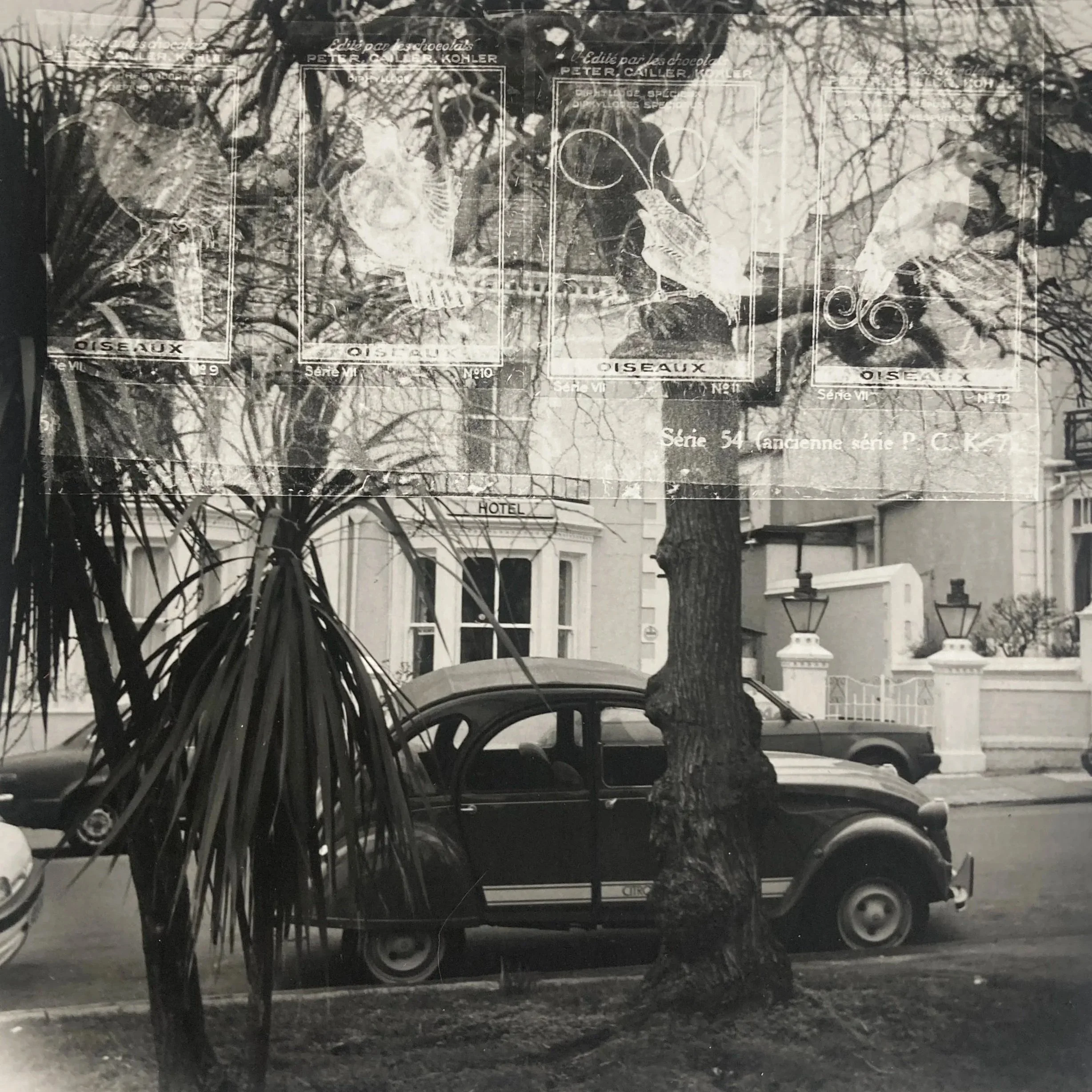
recent images
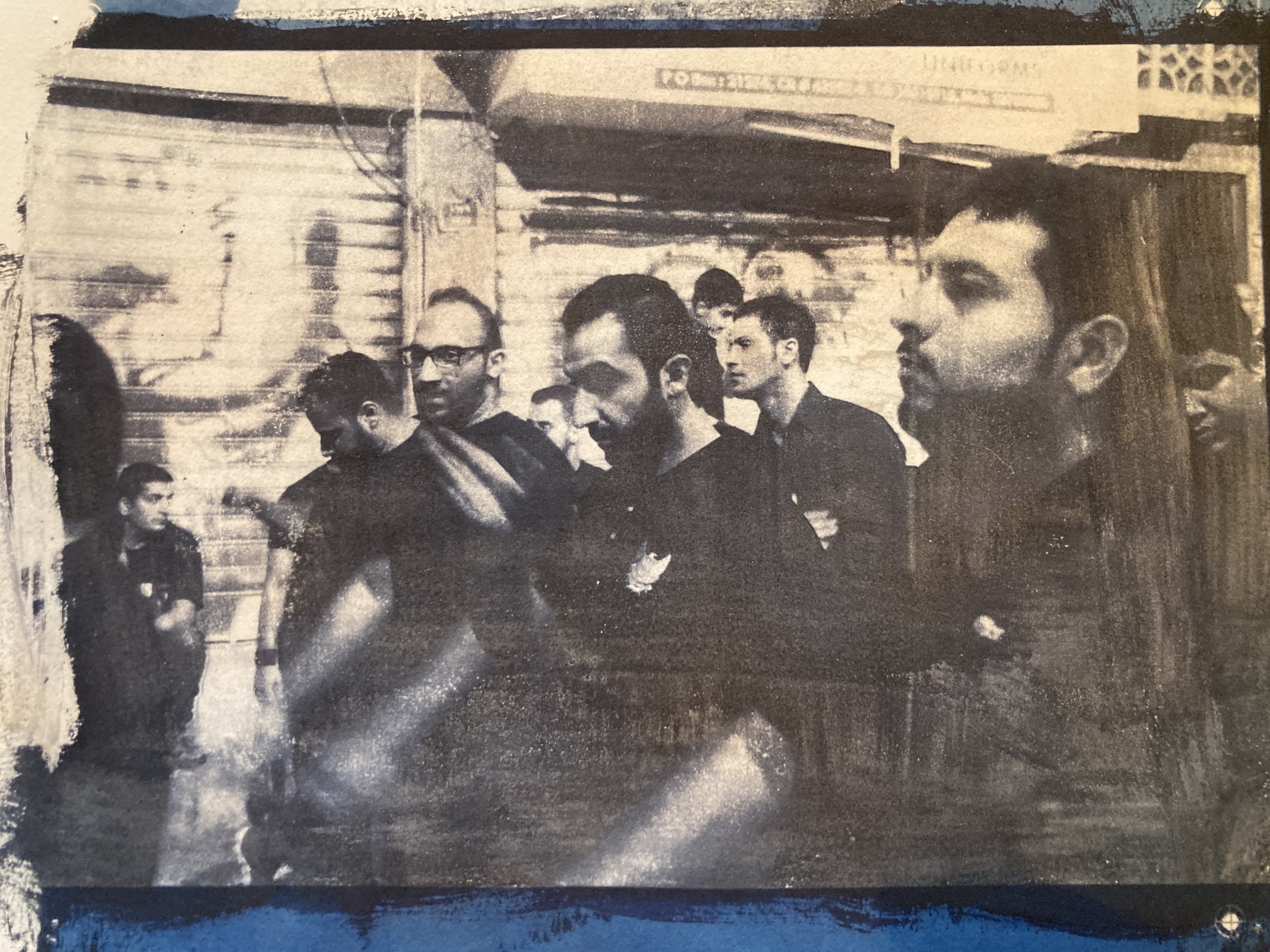
Gum bichromate over cyanotype print, image 8” x 10”, printed on watercolor paper. Photographed 2013, Bahrain, printed 2026.
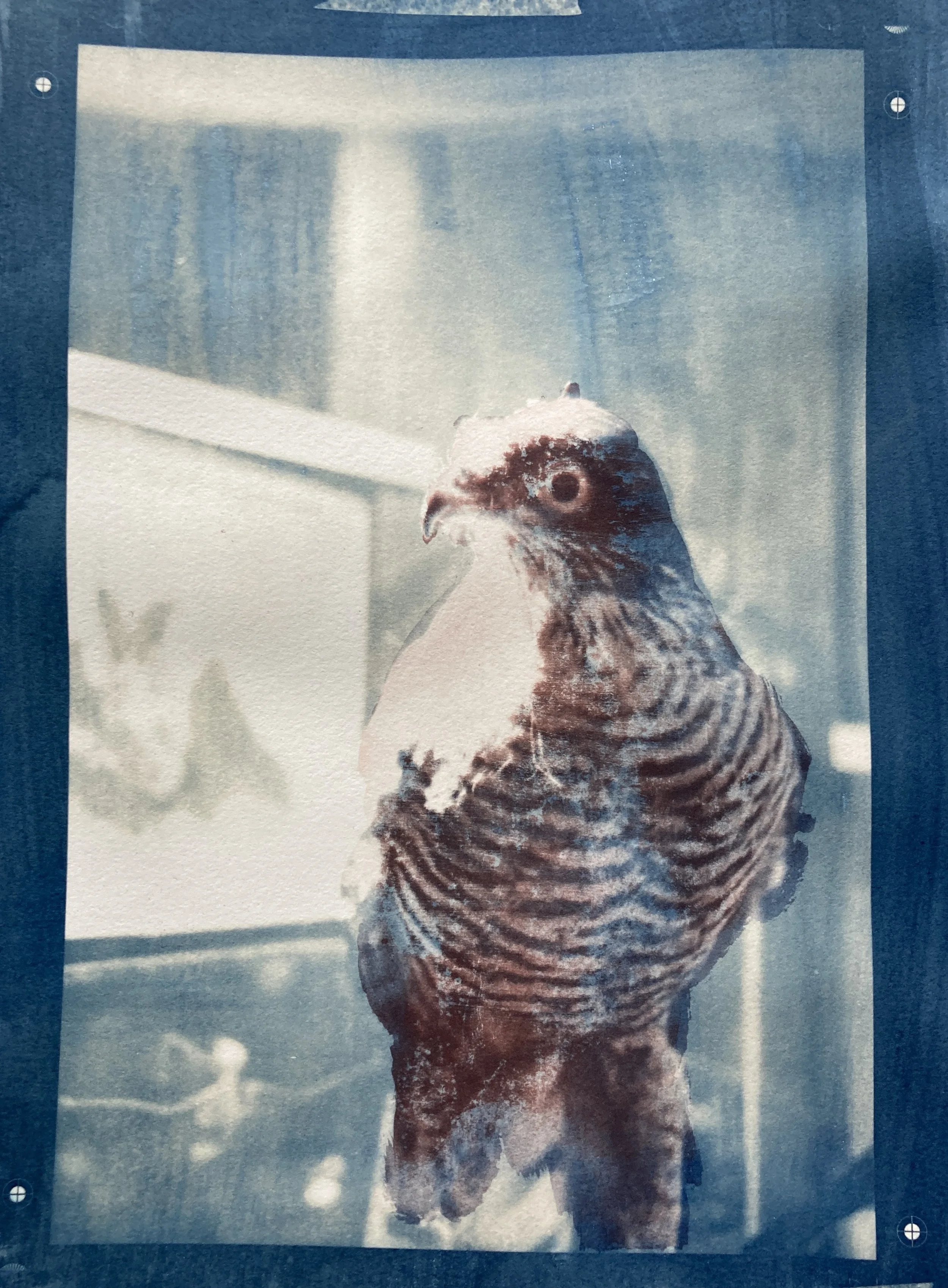
This goshawk taxidermy was on display in the Grant Museum. Gum bichromate over cyanotype print, image 8” x 10”, printed on watercolor paper. Photographed 2013, London, printed 2026.
Analog Image Making
I work primarily with film and traditional photographic printing, while continuing to incorporate digital tools into my practice.
During my service as a Peace Corps Volunteer (2006–2008), I purchased my first digital camera and welcomed the convenience of working without film. But as I experimented with digital photography and considered the work of other artists, I found myself increasingly drawn to the depth, materiality, and tactile experience of the photographic print.
After a ten-year hiatus, I returned to the darkroom in 2014. Since then, I have expanded my practice to include several hand-coated photographic printing techniques, often referred to as alternative or nonsilver processes. These methods offer distinctive ways of working with light, materials, and image-making, and provide opportunities for experimentation beyond the conventional photographic print.
Types of Prints
Gum bichromate is a hand-coated photographic process that I use, often in combination with the cyanotype. It employs a light-sensitive mixture of gum arabic, dichromate, and watercolor pigment. The image is built through successive exposures and washes, allowing for considerable control over color, texture, and tonal qualities. When combined with other processes, gum bichromate offers further possibilities for layering and interpreting an image.
Cyanotype is an alternative photographic printing process developed in 1842, best known for its distinctive deep blue color. The process involves hand-coating paper with a light-sensitive solution and exposing it to ultraviolet light. Historically associated with photograms—images made by placing objects directly onto sensitized paper without a camera—cyanotype offers considerable flexibility in both technique and expression. I work with a variety of papers, including high-quality stationery and watercolor papers.
Gelatin Silver Print
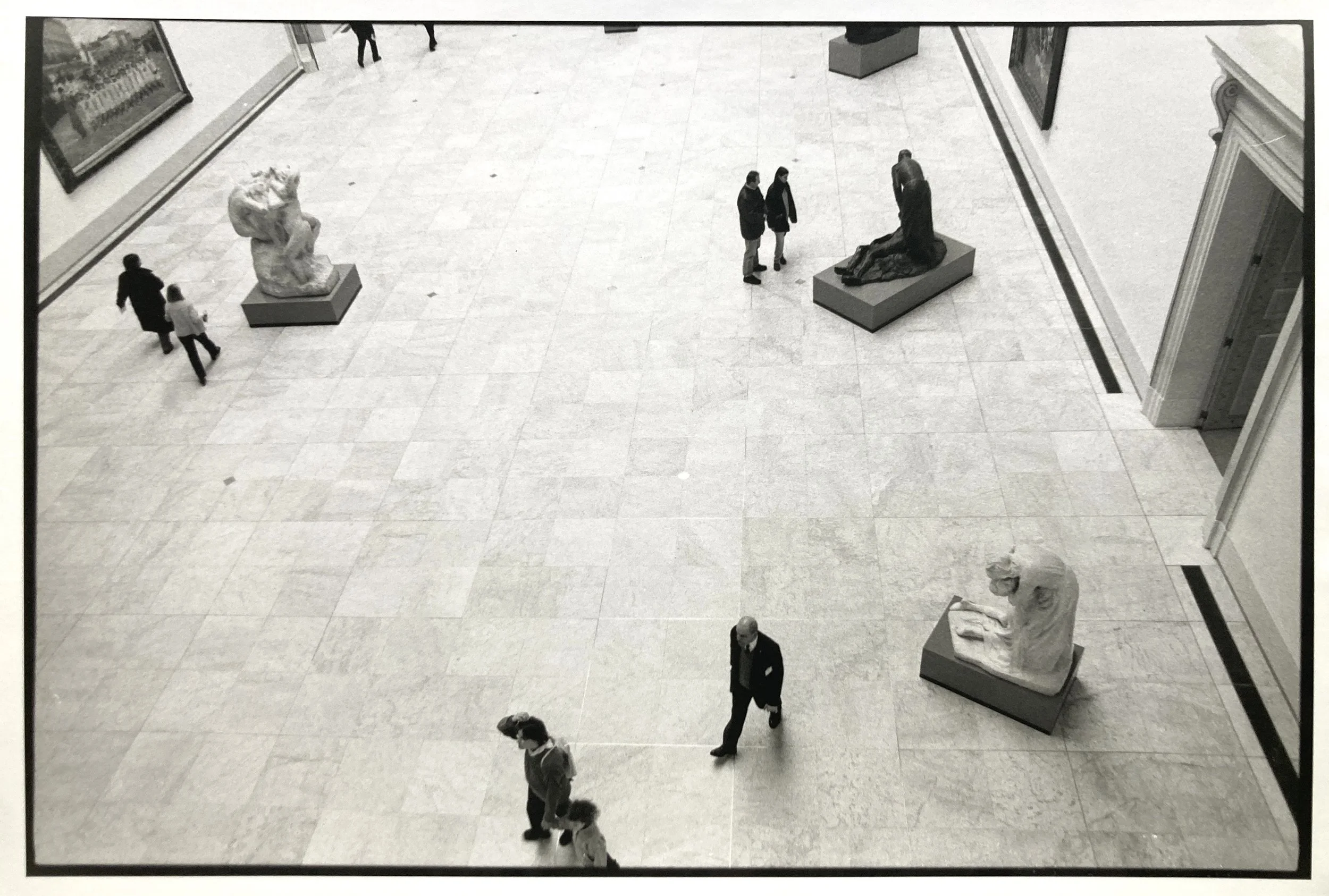
The gelatin silver print is perhaps the most familiar form of traditional darkroom photography. Developed in the 1870s, it uses a negative-to-positive process in which an image on film is transferred to light-sensitive paper and developed through chemical processing. I primarily use commercially produced, fiber-based photographic paper, valued for its archival qualities and its rich range of tonal gradations.